


Safe Fields and Food
Learn about our collaborative teams.
Related News
July 2, 2026
EPA Doing Less With Less: slashing science staff; dismissing hazard data; weakening pesticide regulations; compromising health protections
This summer, the U.S. Environmental Protection Agency (EPA) announced that it was expanding its list of “alternative test methods” that could be used to assess the health risks of chemicals, including pesticides, that end up in our air, water and food. Without frameworks in place to prevent backsliding, this will result in weaker health protections from harmful chemicals. Scientists within the Coming Clean network, allied with environmental health professionals and farmworker groups, have been sounding alarm bells about the irresponsible use of NAMs for many years. Now, scientists across our organizations must form a united front against expanded use of NAMs to replace proven science, before more regulatory protections disappear.
Read More
June 25, 2026
Supreme Court decides to protect pesticide profits over human health
“Today’s Supreme Court decision is more proof that pesticide corporations have too much influence in government. Bayer made over 11 billion dollars from pesticide sales in 2023, and last year alone, spent over 9 million dollars on lobbying for policies that protect pesticide profits instead of basic human health. If you use a product that fails to warn about its ingredients' documented links to cancer, reproductive harm, or neurological conditions, and you develop health complications after using that product, you deserve your day in court. Especially since EPA has approved hundreds of pesticide active ingredients that likely or possibly cause cancer. Congress has the power to protect consumers’ right to sue over pesticide harms. The people have had enough of agrochemical corporate influence in Washington.”
Read More
May 1, 2026
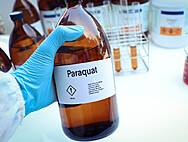
This pesticide is so toxic it’s been banned in over 70 countries. But plants in the South are releasing it into the air.
Wayne County, Mississippi, in a quiet southeast corner of the state, is home to about 20,000 people surrounded by forest and farmland. But Wayne distinguishes itself in two ways: it is home to a Sipcam Agro plant that processes the toxic herbicide paraquat. Within the U.S., the plant is the largest single emitter of paraquat. Wayne County also sees high rates of Parkinson’s disease deaths, in the top 7% of all U.S. counties that reported Parkinson’s deaths between 2018 and 2024. Troves of evidence have long linked paraquat to Parkinson’s, the world’s fastest-growing – and incurable – neurodegenerative disease. In March, Syngenta announced it would stop producing paraquat. But Syngenta’s exit doesn’t mean paraquat will stop entering the U.S. Instead, other companies and other facilities – like the one in Wayne County – will fill the gap, likely increasing the amount of paraquat they handle.
Read More
March 11, 2026
Company to Cease Production of Toxic Herbicide Banned in More Than 70 Countries
Multinational agriculture technology company Syngenta announced last Tuesday (March 3) that it will cease global production of the herbicide paraquat by the end of June, including at its facility in Iberville Parish. U.S. farmers commonly use the highly toxic paraquat for weed control. Much of the paraquat used by the farmers enters the country through New Orleans, according to a recent report by Coming Clean, Alianza Nacional de Campesinas and Pesticide Action and Agroecology Network. Along the way, workers at the ports and in the company’s facilities risk exposure to the chemical. A 2017 Environmental Protection Agency memo noted that paraquat is so toxic that “one sip can kill,” and that even minimal contact can cause serious injury to the eyes and skin. Inhaling paraquat can also cause lung damage, according to the U.S. Centers for Disease Control and Prevention. Exposure to the chemical is associated with Parkinson’s disease
Read More
March 4, 2026
Facing lawsuits and public outrage, Syngenta will no longer manufacture paraquat
Syngenta announced that it would cease global production of the toxic herbicide paraquat by the end of June 2026, at a time when public awareness of paraquat’s harms is rising. Across the U.S., farmers and farmworkers have shared their stories of developing lifelong health conditions after being exposed to paraquat. Thousands of lawsuits are pending in U.S. courts, alleging Syngenta failed to warn people of paraquat’s documented links to Parkinson’s disease. And bills to ban or restrict paraquat have been introduced in at least twelve states.
“It’s great to hear Syngenta is turning off the tap to a major source of paraquat to the U.S. But SinoChem’s corporate business model hasn’t changed,” said Judith Robinson, Executive Director of Coming Clean. “Its facilities will continue to pollute the air and water from the UK to Cancer Alley. Its pesticides are nearly all derived from fossil fuels that contribute to climate change. If you’re concerned for your health because paraquat has been sprayed on your food for years, you should also be concerned about the many other toxic herbicides that remain and could replace it.”

December 17, 2025
China banned it, but still sells controversial weed killer in America
While paraquat is prohibited from use on farms in China, continued imports to the United States are protected from trade barriers. Paraquat was recently put on a 37-page list of products that were exempt from tariffs President Donald Trump put on China. “The health and environmental harms of paraquat will be felt in U.S. communities for generations, while profits from paraquat sales overwhelmingly flow to Chinese companies,” researchers wrote. Imports to the United States rose from just 11 million pounds in 2012, according to the report from advocacy organizations Alianza Nacional de Campesinas, Coming Clean and the Pesticide Action Network. The report was produced as part of a research series from the advocacy groups that’s examining the harm of pesticides. “Foreign-owned agrochemical companies are profiting while our essential farming communities suffer,” said Judy Robinson, executive director of Coming Clean, in a statement.
Read More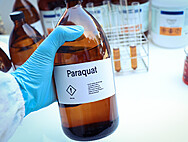
January 14, 2026
“New science” isn’t needed to ban paraquat in the U.S.
“EPA doesn’t need to wait for new science to ban paraquat in the United States. Credible research meeting EPA’s “gold standard” tenets has already been submitted to EPA’s public docket demonstrating that exposure to paraquat causes harm to farmworkers, farmers, and rural communities, and that its continued registration for use poses an unreasonable risk to these communities. Study after study has shown that people who use or are exposed to paraquat are more likely to develop Parkinson’s disease and other adverse health conditions. The evidence of harm is strong enough that over 70 countries have already banned this toxic pesticide from use. Meanwhile, EPA has declined to review this evidence. Now, by suggesting that we need to wait for “accurate new studies [to] reveal additional risk,” EPA is attempting to push the regulatory reset button to buy chemical corporations profiting from paraquat sales more time.
Read More
December 15, 2025
Thousands of U.S. farmers have Parkinson’s. They blame a deadly pesticide.
Paul Friday remembers when his hand started flopping in the cold weather – the first sign nerve cells in his brain were dying. He was eventually diagnosed with Parkinson’s, a brain disease that gets worse over time. His limbs got stiffer. He struggled to walk. He couldn’t keep living on his family farm. Shortly afterward, Friday came to believe that decades of spraying a pesticide called paraquat at his peach orchard in southwestern Michigan may be the culprit. The pesticide, a weed killer, is extremely toxic. With evidence of its harms stacking up, it’s already been banned in dozens of countries all over the world, including the United Kingdom and China, where it’s made. Yet last year, its manufacturer Syngenta, a subsidiary of a company owned by the Chinese government, continued selling paraquat in the United States and other nations that haven’t banned it.
Read More